What is SGE and why does it matter for Houston SEO?
Winning the AI Snapshot—often referred to as Google’s Search Generative Experience (SGE)—is the new frontier for Houston businesses looking to maintain visibility in a rapidly evolving digital landscape. As artificial intelligence begins to synthesize search results into a single, cohesive answer at the top of the page, the traditional "blue link" strategy is no longer sufficient. To stay competitive, local companies must pivot their content to focus on high-intent, conversational queries that AI models prefer to cite.
Quick Answer: How do I optimize for SGE in Houston?
Optimizing for SGE requires a shift from keyword-stuffing to "Entity-Based SEO," where your content demonstrates clear authority on specific local topics. In practice, this means providing direct, data-backed answers to complex questions, utilizing structured data (Schema markup), and ensuring your business is mentioned in authoritative "citational" sources like local directories and industry-specific lists.
What is SGE and why does it matter for Houston SEO?
Search Generative Experience (SGE) is an AI-powered interface by Google that provides synthesized answers to user queries directly at the top of the search results page. For Houston businesses, SGE represents a fundamental shift because the AI "Snapshot" occupies the most valuable real estate on mobile and desktop screens, often pushing traditional organic results and even local map packs further down.
How does SGE change local search behavior?
SGE changes local search behavior by moving from "discovery by browsing" to "discovery by synthesis." Instead of a user clicking through five different websites to compare "best HVAC repair in Houston," the AI compiles a list of top-rated providers, their specific specialties, and recent customer sentiment into one paragraph. According to early industry observations, SGE snapshots can appear for over 80% of informational and commercial queries, making it the primary gateway for customer acquisition.
What are the "AI Snapshot" sources?
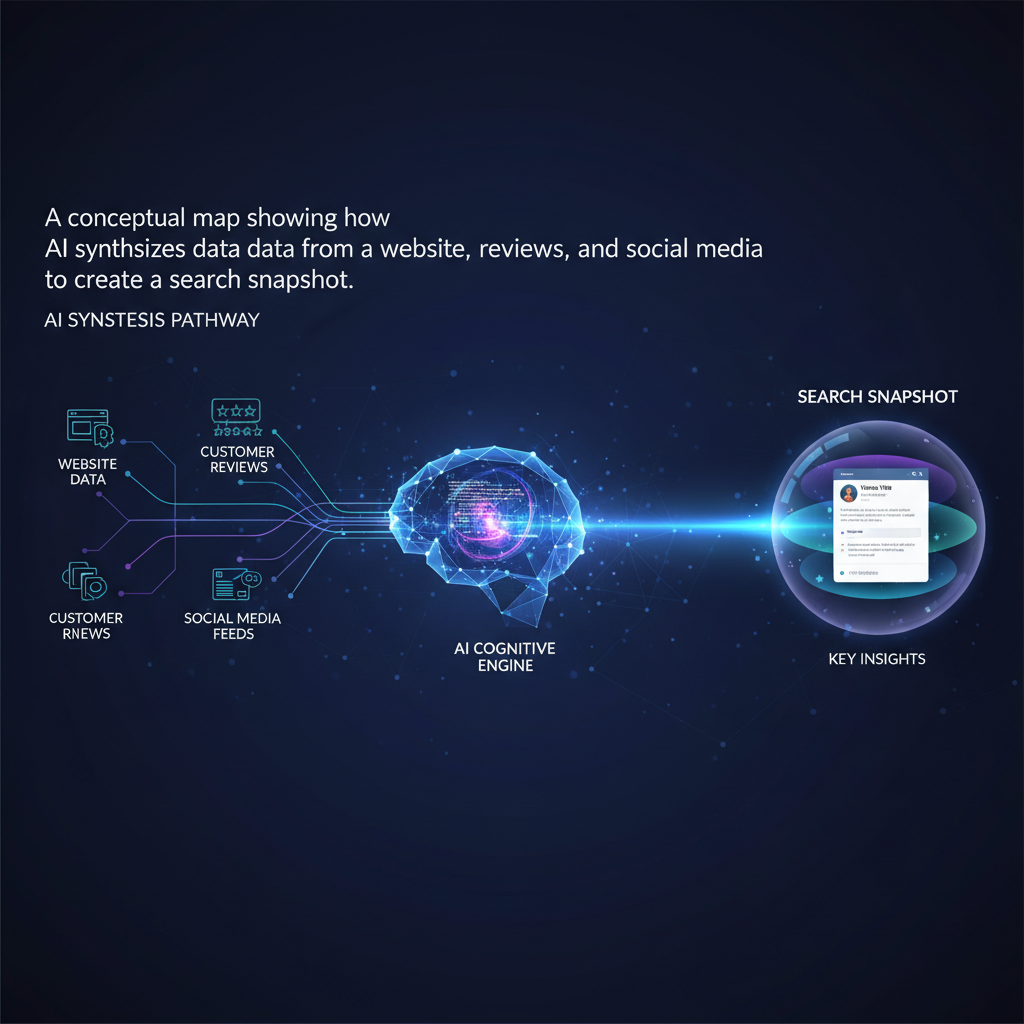
Google’s AI generates its snapshots by pulling information from a "corroboration set" of high-authority websites. This includes your own website's content, your Google Business Profile, and third-party review sites like Yelp or the Better Business Bureau. To be included, your content must be structured in a way that the AI can easily parse and verify.
🥧 Projected Search Real Estate Shift
How should Houston businesses pivot their content strategy?
Businesses must pivot from creating broad, generic content to producing high-utility, "long-tail" content that answers specific, multi-layered questions. AI models are designed to handle complex queries, such as "What is the best energy-efficient roofing material for the Houston humidity?" Your content must be the most authoritative answer to that specific question to win the citation.
Why is conversational content critical for 2026?
Conversational content is critical because AI search is driven by Natural Language Processing (NLP). Users are increasingly asking full questions rather than typing fragmented keywords. For example, a Houston law firm should shift from targeting the keyword "Houston car accident lawyer" to answering "What are the first steps to take after a multi-car pileup on I-10?" This approach aligns with Google's E-E-A-T guidelines, which prioritize Experience, Expertise, Authoritativeness, and Trustworthiness.
How do I use "Product-Led" content for AI?
AI search optimization for products involves providing granular technical details that an AI can use to compare your offerings against competitors. In the Houston market, if you sell home generators, your website should include detailed specs, installation timelines, and specific performance data during Gulf Coast weather events. This level of detail allows the AI to categorize your business as a high-confidence recommendation for specific user needs.
💡 Tip
The "Direct Answer" Rule: To increase your chances of being cited in an AI Snapshot, start your blog posts or service pages with a 2-3 sentence summary that directly answers the primary question of the page. This "summary-first" structure is highly "crawlable" for AI models.
What are the technical requirements for SGE visibility?
The technical requirements for SGE visibility center on "machine-readability," ensuring that search engines don't just see your words, but understand the context behind them. This is primarily achieved through advanced Schema markup and lightning-fast site performance.
Which Schema types are most important for Houston businesses?
Local businesses should prioritize `LocalBusiness`, `Product`, `FAQ`, and `Review` Schema. By implementing these, you are essentially providing Google with a "cheat sheet" that identifies your location, price points, and service area. In our experience at INFINI Marketing, websites with comprehensive Schema implementation see a significantly higher rate of inclusion in AI-generated summaries compared to those without.
How does site speed impact AI citations?
Site speed remains a core ranking factor, particularly through Core Web Vitals. If an AI model has to choose between two equally authoritative sources to cite in a snapshot, it will almost always prefer the one that loads faster and provides a better user experience. For Houston businesses targeting mobile users on the go, a sub-2-second load time is the target.
📊 Impact of Technical Factors on AI Inclusion
What are the common pitfalls in AI search optimization?
A common pitfall is over-optimizing for "vanity keywords" while neglecting the actual helpfulness of the content. AI is increasingly capable of detecting "thin" content that was written solely for SEO purposes without providing real-world value.
"The businesses that will thrive in the age of SGE are those that stop writing for 'the algorithm' and start writing for 'the solution.' AI is simply a bridge between a user's problem and your solution; your job is to make that bridge as sturdy as possible through factual accuracy."
Is AI-generated content bad for SGE?
AI-generated content is not inherently "bad," but it often lacks the "Experience" element of E-E-A-T. Google’s systems are designed to reward content that provides first-hand insights that an AI cannot replicate. For example, a Houston realtor sharing their personal observations on neighborhood flooding trends during Harvey carries more weight than a generic AI-written neighborhood guide.
How can I track my performance in SGE?
Tracking SGE performance is different from tracking traditional rankings. Since AI snapshots are dynamic and personalized, you should focus on "Share of Voice" and "Attributed Traffic." Tools like Google Search Console are evolving to show more data on "Generative" impressions, but monitoring your brand mentions in local Houston forums and news sites is equally important, as these serve as "seeds" for the AI's knowledge.
Summary: Key Takeaways for Houston Businesses
Focus on Entities: Don’t just target keywords; become the "Entity" for your niche in Houston.
Answer Complex Questions: Structure your content to solve multi-step problems for your customers.
Prioritize Experience: Include real-world photos, case studies, and local Houston insights that AI can't invent.
Technical Excellence: Use Schema markup to give AI a clear map of your business data.
- Be Citational: Ensure your business information is consistent across the web so the AI can verify your facts.
- Hits: 157