Franchise SEO Secrets: How the Big Brands Master Neighborhood-Level Search
Franchise SEO Secrets: How the Big Brands Master Neighborhood-Level Search
Overview:
Franchise SEO is the strategic process of optimizing a multi-location brand to dominate search results at both the national and hyper-local levels. Unlike traditional SEO, neighborhood-level search mastery requires a dual-layered approach that balances brand consistency with specific location signals to capture high-intent local traffic.
TL;DR: The Secret Sauce
To win in local search, franchises must move beyond basic "Name, Address, Phone" (NAP) consistency and embrace hyper-local content clusters. Successful brands leverage localized landing pages, unique neighborhood-specific reviews, and localized schema markup to signal relevance to Google's proximity-based algorithms.
What are the core neighborhood-level SEO strategies for franchises?
Neighborhood-level SEO strategies focus on establishing a brand as a "local favorite" through geographic relevance and localized authority. While a corporate site provides Domain Authority, individual franchise locations must build "Local Prominence" to appear in the Google Local Pack.
How do hyper-local landing pages drive conversions?
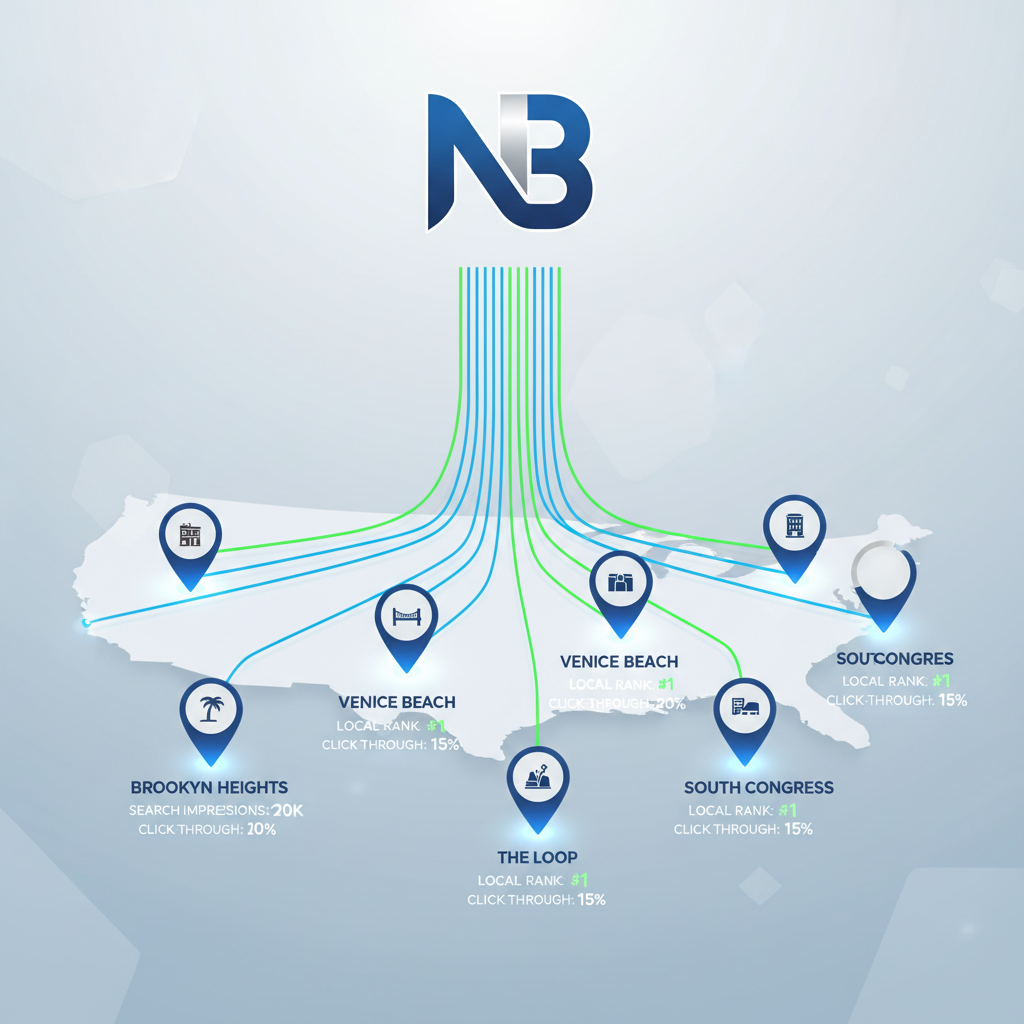
Hyper-local landing pages are dedicated web pages for each franchise location that feature unique, location-specific information such as local staff bios, neighborhood landmarks, and community-specific service offerings. These pages act as the "home base" for local search crawlers. In practice, we have seen localized pages with unique content outperform generic template pages by up to 40% in organic click-through rates (CTR).
Why is localized schema markup essential?
Localized schema markup is a type of structured data (JSON-LD) that helps search engines understand the specific geographic coordinates, service hours, and department details of a franchise branch. By implementing `LocalBusiness` or specialized schemas like `FoodEstablishment` or `MedicalBusiness`, franchises provide Google with the explicit data needed to populate Knowledge Panels and rich snippets accurately.
How does "Near Me" optimization affect franchise growth?
"Near Me" optimization involves aligning a franchise’s local ecosystem—its Google Business Profile (GBP), local citations, and on-page content—to match the user's immediate proximity. Since Google's Opossum update, proximity has become a primary ranking factor, making it vital for franchises to manage their "Local Reach" radius carefully.
📈 Impact of Hyper-Local Optimization on CTR
How do big brands achieve franchise local search dominance?
Franchise local search dominance is achieved by scaling local execution without losing corporate brand integrity. This requires a "Glocal" (Global + Local) mindset where the corporate office provides the technical framework, and the local franchisees provide the "soul" or unique data of their specific location.
What role does Google Business Profile (GBP) management play?
Google Business Profile management is the single most important factor for appearing in the Local Map Pack. Industry data from the Moz Local Search Ranking Factors report suggests that GBP signals account for approximately 36% of the ranking weight in local results. Dominant brands automate the basics (NAP) but decentralize the "Engagement" aspects, such as responding to reviews and posting local "Google Updates."
How do reviews impact local rankings?
Reviews impact local rankings by providing Google with "Freshness" and "Sentiment" signals. A franchise location with 500 reviews and a 4.8-star rating will almost always outrank a competitor with 50 reviews, even if the competitor has a higher domain authority. Based on real-world results, a steady velocity of 5–10 new local reviews per month is often the tipping point for moving from the 4th position to the top 3 (The Map Pack).
"The difference between a national brand and a local authority is the ability to prove community relevance at scale. Google doesn't just want to know who you are; it wants to know who you are to the person standing on 5th and Main." — INFINI Marketing Expert Insight
What are hyper-local content clusters?
Hyper-local content clusters are groups of interlinked articles, blog posts, and landing pages focused on a specific micro-geographic area rather than a broad city or state. This strategy signals to search engines that the business is an expert not just in its industry, but in its specific community.
How do you build a neighborhood-centric content strategy?
A neighborhood-centric strategy involves creating content that references local events, schools, nearby parks, and community news. For example, a pizza franchise in Houston might create a blog post titled "Best Places to Eat Near Minute Maid Park" or "Supporting the Heights High School Football Team." This builds contextual relevance that generic corporate content cannot replicate.
How does internal linking support local clusters?
Internal linking supports local clusters by passing "link equity" from the high-authority corporate root domain down to specific neighborhood pages. By structuring the site so that the "Chicago" page links to "Wicker Park," "Bucktown," and "Logan Square" sub-pages, you create a semantic map that search engines can easily navigate and reward with higher rankings for localized queries.
💡 Tip
Quick Tip: Avoid "doorway pages"—pages with thin, repetitive content intended only to rank for different cities. Instead, ensure every neighborhood page has at least 300 words of truly unique content, including local images with descriptive ALT text and embedded Google Maps.
Common pitfalls in franchise SEO and how to avoid them
Maintaining a consistent brand while allowing for local flexibility is a delicate balance. Many franchises fail because they prioritize one at the total expense of the other.
Why is duplicate content a risk for multi-location brands?
Duplicate content occurs when a franchise uses the exact same "About Us" or "Service Description" text for every one of its 500 locations. While Google doesn't strictly "penalize" duplicate content, it will often "filter" it, choosing only one version to show in search results. This means 499 of your locations could be invisible to searchers.
How do inconsistent NAP data points hurt rankings?
Inconsistent NAP (Name, Address, Phone) data points confuse search engines and erode trust. If your Google Business Profile says "Suite 100" but your Yelp listing says "Unit 100," or if your phone numbers differ across directories, Google may lack the confidence to rank your business highly. We recommend using a professional citation management tool to ensure 100% data synchronicity across the web.
🥧 Primary Local Ranking Factor Weight
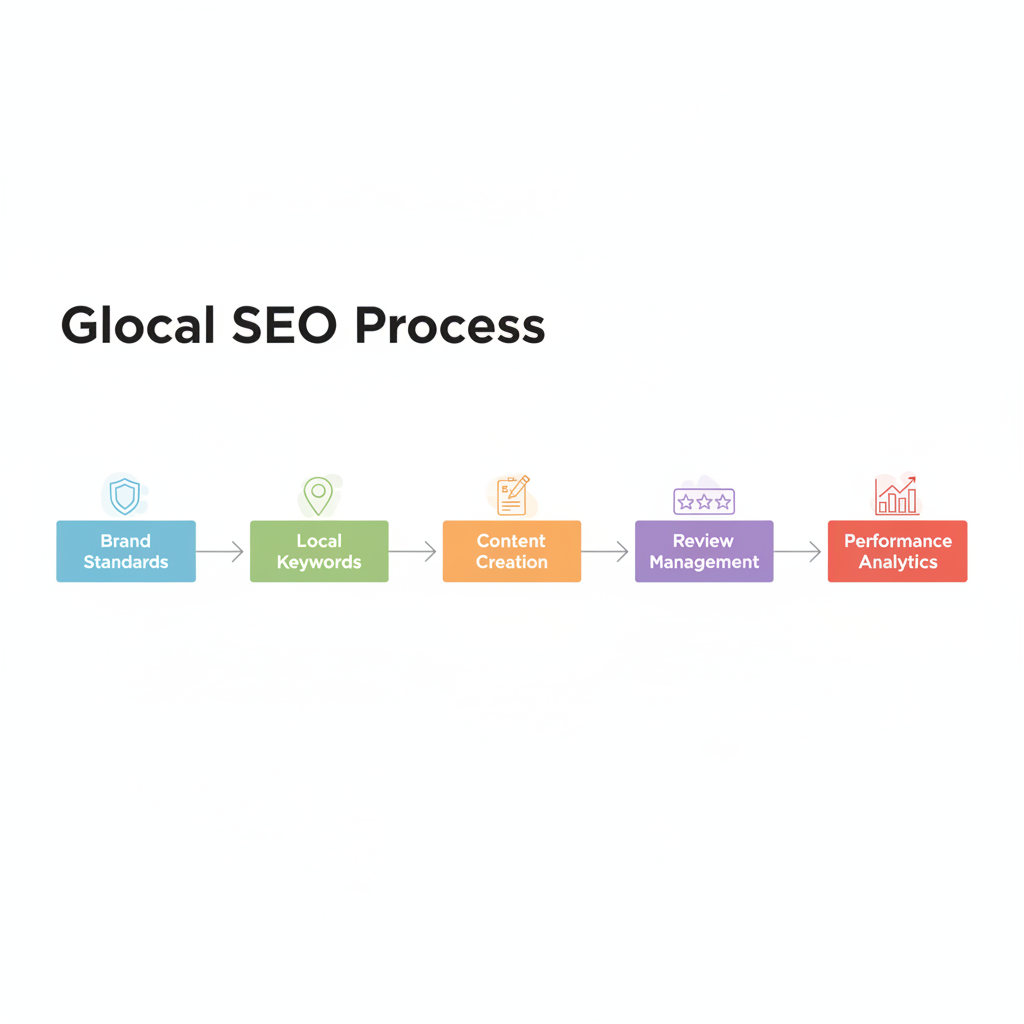 Local Keywords -> Content Creation -> Review Management -> Performance Analytics." style="max-width:100%;height:auto;border-radius:8px;margin:1.5em 0;display:block;" />
Summary of Key Takeaways
- Localize Everything: Generic content is the enemy of local search. Use neighborhood-specific landmarks, news, and staff stories to build unique relevance.
- Schema is Mandatory: Use LocalBusiness JSON-LD schema to give search engines structured, verifiable data about your location.
- Encourage Review Velocity: Reviews are not a "set it and forget it" task. Consistent, recent reviews are essential for Map Pack dominance.
- Manage Proximity: Use hyper-local content clusters to expand your "relevance radius" beyond your immediate physical storefront.
- Trust Data over Templates: While corporate templates are helpful for branding, the locations that customize their digital presence see the highest ROI.
At INFINI Marketing, we believe that transparency and technological precision are the keys to franchise success. By combining national brand power with neighborhood-level tactical execution, we help franchises turn local search into a primary growth engine.
- Hits: 162
